
Unmapped
When Stripe launched in 2010, there was no reference point for what payments built for developers should look and feel like. They had to invent it. The visual language, the documentation style, the dashboard—all of it came from scratch, and the choices Patrick, John, and co. made in those early years became the standard that everyone else inherited.
That kind of fresh ground does not come around often.
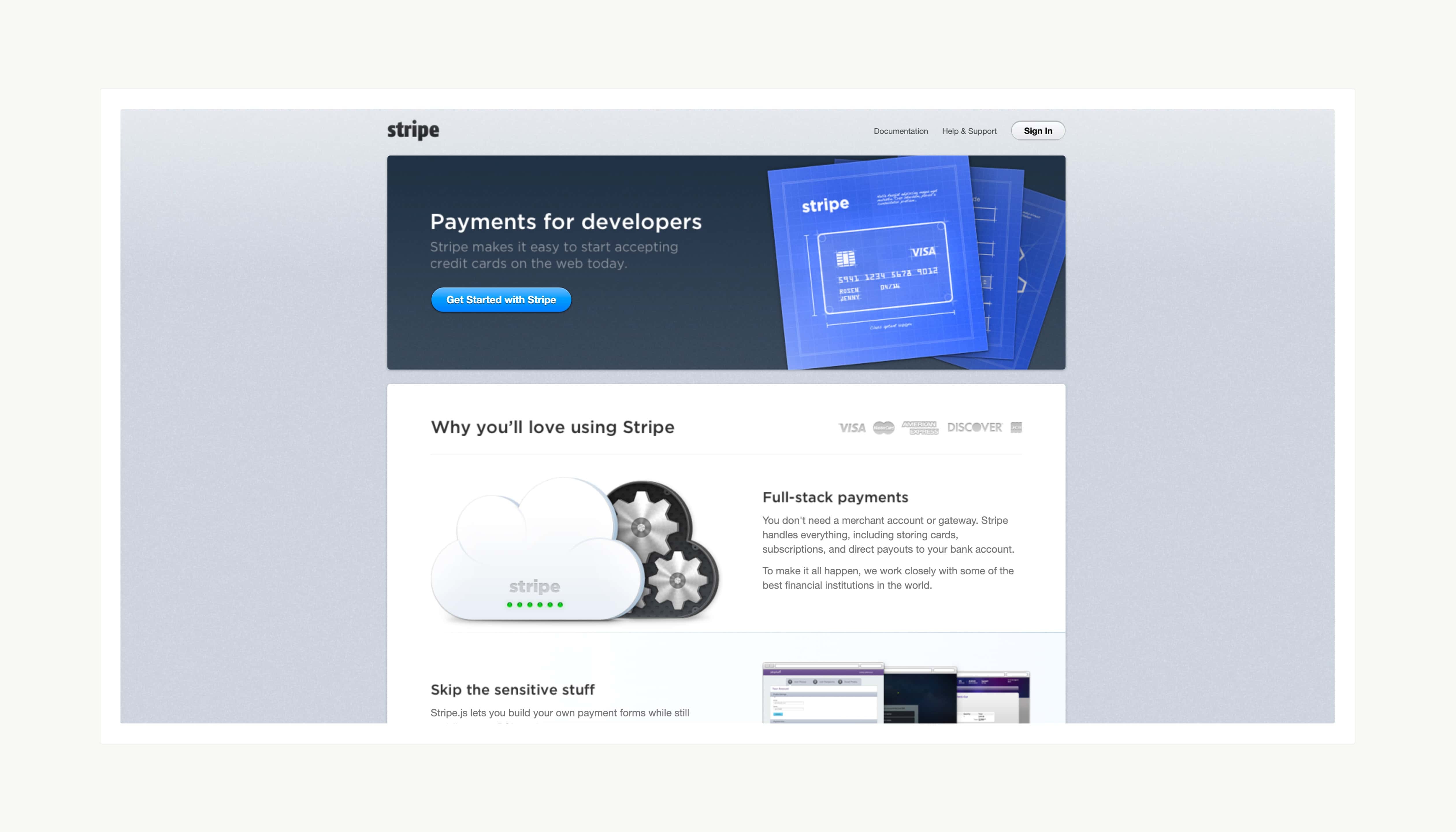
I believe Natural is in a similar position, with perhaps a more ambiguous design challenge. When Stripe launched, the user was a human. A developer, sure, but still a person who clicks, scrolls, reads, makes decisions. You could design for that. You knew what the actor looked like.
With agentic payments, we don't fully know yet. The design patterns don't exist. The vocabulary hasn't been established. The companies building on our APIs are themselves figuring out things like what an agent "is" in their product, how it presents to their users, how they explain what it did or can do and why. Which means the person who designs and builds all this isn't just making aesthetic choices—they're helping define how a new category of software gets understood.
There's no incumbent whose design language we're reacting against. There's no obvious reference point for what "agentic payments, well-designed" looks like. There's no Stripe, no Linear, no equivalent in our specific space to pattern-match against1. The questions we're asking are genuinely new: What does dispute management look like when users are setting spending limits on actors that learn and adapt? How do you design interfaces for actors that may never see them? What does creating an agent look like when people have no mental model of what that agent could even do? How do you design for trust when the thing you're trusting may not be a person?
These are open questions. No one has designed this before, let alone elegantly. That's the job.
The canvas
There are many interesting design and engineering challenges here, but the ones that I get most excited about are around observability, disputes, and identity.
Observability: Every great monitoring interface from Datadog to Sentry was designed for a human actor whose behavior follows recognizable patterns. None of that applies here. You get to invent the visual grammar for watching something non-human operate in the world. The design challenge here is to build a view that gives meaningful signal. What gets surfaced? What gets grouped? When? How do you make a non-human actor's behavior legible at a glance, and auditable by a human or agent when something goes wrong?
Disputes: The existing dispute UX in traditional payments is essentially "Did you make this transaction, yes or no?" That does not fit agentic payments. The question does not just come down to authorization, but rather intent. Nobody has designed a resolution flow for that yet. Designing the resolution flow must happen alongside the development of a mostly new mental model of disputes.
Identity: KYB and KYC flows are some of the most notoriously bad experiences in fintech. Now layer in the fact that the entity being verified may not be a person or a company, but an agent acting on behalf of one. There is a ton of blank canvas work here...
Why now
Natural is 223 days old and came out of stealth last week. The design decisions made over the next 90 days will shape how Natural looks, feels, and communicates for the next decade(s).
The founding-era window for this kind of influence is short. If it isn't clear already, we are measuring our progress in days, not months or years. I joined Natural as a designer 112 days ago because I believed this was the team and the problem I could do my best work on. That conviction hasn't changed. If anything, watching the product and team come together over the last 112 days has made it stronger.
If you've been looking for a role where your work is visible, the problems are genuinely hard, and the category hasn't been designed yet, this is it.
Join us at /careers.
1. The closest reference is what Benji Taylor and co. did with Family. Crypto wallets at the time were among the most functionally intimidating products in consumer software. You had seed phrases, gas fees, approval flows, all these confusing concepts to the average consumer. Every app in this space treated that vocabulary as a given—something to design around, not through. Family was different. Benji's thesis, which he wrote about in Family Values, was that fluidity isn't decoration but rather it's comprehension. Family excelled at comprehension.
